How SaaS Companies Can Simplify Onboarding to Reduce Drop-off Rate

To begin, onboarding is the process of connecting clients or customers to a company’s products or services in order that they may successfully access and start using their preferred SaaS product or service. In simple terms, any SaaS company with products that are on demand such as Zoom, Mailchimp, Slack, Trello, and more, require a customer to sign up before starting using the company products. However, the onboarding process does not end there, depending on the company’s onboarding style, there may be other steps a client may need to undergo before starting to use the product.
Why is Onboarding Important for SaaS Companies?
Customer onboarding is essential because it creates a friendly environment for the intense interest your customer has developed with your product or service. This calls for a good onboarding process that will solidify this ongoing relationship between your client and your product.
A great customer onboarding should reflect the following features;
Ensure your customers are engaged. You need to help your customers have a clear picture of your product and get to experience the value they will obtain from using your product. This will prompt them to not only start using your product successfully, but also they will have a reason to log back in and continuously use your SaaS product.
Enhance trial conversion. If your SaaS company is offering a free or discounted product trial, you need to ensure your trial users get to experience the real value of your product during onboarding. Demonstrating the real value of your product during the onboarding process, right from the start of the product trial, will likely attract potential clients who will convert to paid customers.
When your customer onboarding process offers potential users real product value, your customers will likely start using your product immediately and repeatedly as long as they get the solution to their problem.
Poor customer onboarding can lead to high drop-off rate, leading to very low growth rate for the business. The majority of SaaS companies fail to consider customer retention factors after achieving the product/market fit. This achievement makes businesses become more obsessed with customer numbers in the larger organizational growth process, leading to ignoring the core principle of customer retention.
A research study conducted by Harvard Business School showed that SaaS companies can accelerate their profit rate by 25% to 95% every time they retain 5% of their customers. SaaS companies that consider the importance of customer retention can greatly benefit. Those who fail to do so will not add an inch of profit into their money bags.
What are the Best Practices for SaaS Customer Onboarding?
This article will highlight onboarding best practices for SaaS business owners to follow:
Create a Seamless Sign-up Session
SaaS signup sessions need to be smooth sailing for the customers initializing the onboarding process. The most effective signup process is one that has less friction. This means you only create minimal form fields by asking information that is relevant to the customer.
You can also offer social logins where you allow sign-up via existing accounts such as Google, Apple, Facebook, LinkedIn, or Pinterest to speed up the sign-up process. Implementing a "freemium" or "trial" model can save that day because it provides immediate access to the product after a short sign-up process, allowing the user to experience value right away.
Another sign-up best practice is the use of progress indicators. Progress bar helps manage customer expectations and minimize frustration if the sign-up process has several steps.
After the customer has completed the sign-up process, send a welcome email. This will guide users to the next steps while providing them with support resources. You also need to use in-app guidance, tooltips and walkthroughs, to guide the customer through key product features.
Below is an example of a seamless signup onboarding process by Twilio and Trello;
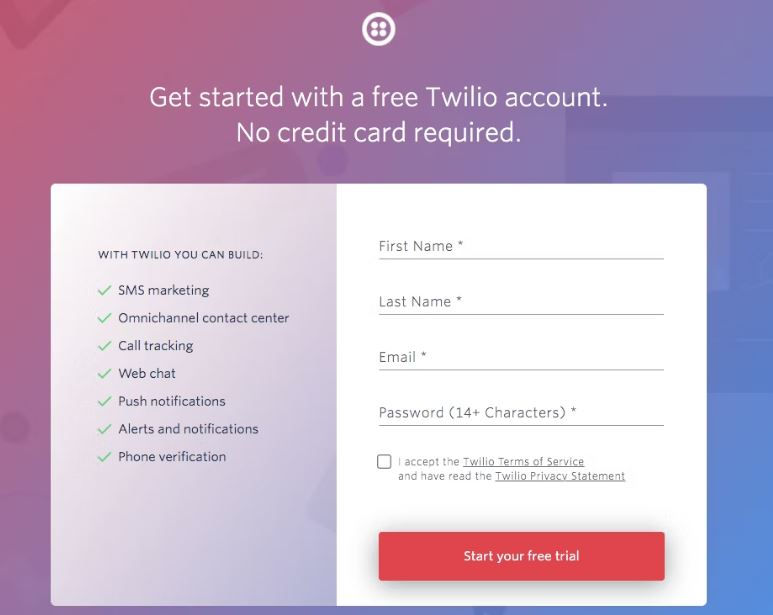
Twilio Signup onboarding process. Image Credit: Help Scout

Trello signup onboarding page. Image Credit: Help Scout
Below is an example of Welcome Email page by Luminary;

Luminary Welcome Email page. Image Credit: Help Scout
Below is an example of tooltips and walkthroughs by Netflix;

Netflix customer onboarding journey. Image Credit: Figma
Below is an example of tooltips and walkthroughs by Slack;

Slack onboarding guide template. Image Credit: Slack
First Log-in
At this point, you want your clients to get the real value of your product. You will need to get your customers ready to start using your product.
Offer guided tutorials or set-up wizards to walk your customers through each step of the set-up process. First log-in best practices include;
Avoid making your customer guess. Ensure when your customer logs in they are faced with a page loaded with necessary onboarding content. You can opt to start with a welcome pop-up or set-up wizard as a trail to start your customer's onboarding journey and help them start using your product.
Provide your customer with a quick win. Ensure that your customers are engaged in an ongoing activity in order that they get to experience a meaningful value from your product. "The more they use it, the more value they will get from it." Once they sense they are achieving quick wins they become more confident that they are heading in the right direction. This provides a psychological boost to keep them engaged.
Below is an example of “First Log-in” page by Insights;

First Log-in page. Image Credit: Help Scout
Arc Browser's Split-Screen Learning
It can be frustrating switching browsers, however, ARC has created a smooth split-screen onboarding experience. Customers can still see their old browser version alongside ARC. This makes the browser switch simple and intuitive. The beauty of the ARC browser is that it automatically imports bookmarks and settings with visual evidence. This ensures that customers don't have to start from scratch.
The strategy seems reassuring for the customers because it alleviates the fear of change. The majority of customers are reluctant to switch tools because they are concerned about working in new environments that they are unfamiliar with. With Arc, this fear of change has been well cared for because everything is kept visible and structured during the onboarding process.

Arc Browser Split-Screen Learning. Image Credit: HubSpot
Follow-up Emails
The onboarding process does not end after the customer has logged in for the first time. You need to continue keeping your customers engaged. After your welcome email, send more follow-up emails. Offer tips and pointers to help your customer effectively use your product and prompt them to log back in.
Some of the follow-up emails best practices include;
Include in your follow-up emails helpful tips and resources that will help your client to navigate through your product and be able to use it.
Share minimal content and often. Short follow-up emails will keep your customers engaging with your product and content. You can focus on one feature or use case per email to avoid loading your customers with too much information, risking confusing them.
Additionally, consider sharing some social proof. For instance, customer quotes and testimonials are good content to sprinkle into your follow-up emails. This will help your customers remember the value of your product and what motivated them to sign up during onboarding.
Below is an example of Follow-up Emails by Zapier;

Follow-up Emails page. Image Credit: Help Scout
Key UX Strategies to Simplify Customer Onboarding and Reduce Churn/Drop-off Rates
You will agree that SaaS churn rates can be detrimental to your business growth despite the promising sign-ups and initial customer onboarding engagement.
A report by SaaS Benchmarks Report stated that a stable churn rate per month ranges at 3-4% as the company grows. However, for your business to be among the top 25% of SaaS businesses, achieving a churn rate of 1-2% is recommended.
One major reason why churn rates can sometimes increase is because users are finding it hard to identify your product value fast. Price or features are not the core reason, but they can contribute to an increase in churn rate.
Here is the solution to this problem - a practical UX strategy. Applying these UX strategy suggestions will not only help you reduce the drop-off rates, but also boost your business growth.
Integrate Contextual Nudges in Addition to Tooltips
It's customary to find products overwhelm onboarding customers with static tooltips that pop up unnecessarily for the first trial. The problem is, these pop ups don't adapt to customer behaviour, leading to confusion and churn.
How to solve this problem:
It is recommended to use tools like Appcues or Pendo to create contextual experiences that align with real-time user engagements. A range of platforms have integrated SaaS AI features to trigger nudges based on predictive behaviour that guide users before they experience friction.
Another tip is to trigger help whenever onboarding customers pause for too long. Alternatively, you can "hover over an area, or misclick."
Lastly, respond to what users are trying to achieve rather than detailing the User Interface features.
Implementing contextual nudges strategy will enhance your SaaS UX design to proactive design instead of passive. With this, you will reduce churn rate, especially for a B2B SaaS, for "early-stage and mid-market products."
Load Blank Screen with Resources
When customers log in for the initial phase during onboarding and land on a blank screen, chances of returning are very minimal. Why? Because there is no data to crunch, neither do the customer have any resource to guide them through your product. This makes returning to your page to be of no benefit.
How to solve this problem:
Ensure all empty modules or dashboards are loaded with resources. Do not leave them blank.
Populate them with demo content or "first action" prompts like "Connect your tool" or "Create your first project."
Use the empty space to visualize user success and preview value.
Loading empty dashboards and modules has a great effect on SaaS churn rate. It is the easiest way to minimize friction during customer onboarding and increase value delivery. This is very effective on freemium or LG (Product-led growth) models.
Notion is one example that tackled this by shifting "their empty states into action prompts." They increased new user retention significantly by displaying sample templates and first-step CTAs.
Regular UX Improvement
Successful SaaS businesses focus on improving their UX. Meaning they constantly listen to users, analyze user behaviors, and eliminate friction points.
What you need to do:
A regular improvement on UX shows you value your customer experience and are invested in their success. This is how trust is created, and it demonstrates that your product will continue to improve and meet your customer's future demands.
For instance, Figma is famous for its "Little Big Updates." They consistently implement small, but highly requested UX improvements based on community feedback. This contributes to product value and customer loyalty.
Make it your aim to run regular UX audits and fix usability issues proactively, with a clear strategy to design "aha moments" for the latest features that enhance customer retention and user satisfaction. This makes continuous improvements an important aspect of your design process.
Incorporate Gamification
Gamification is the best strategy to help engage your first-time customers. It uses elements like points, badges, and leaderboards to improve user experience.
Gamification can be a great tool for encouraging desired behaviors, such as exploring new features, completing onboarding, or adopting best practices. This adds into the customer's natural desire for achievement and recognition.
For example, Duolingo uses streaks, experience points (XP), and leaderboards to translate language learning into an interactive, likable habit.
What you need to do:
Award your customers with "a "Power User" badge for mastering an advanced feature or create a progress bar for completing their profile setup." This practice can significantly improve long-term engagement and motivation.
Create Customer Feedback Loop
Listening to your customers is very crucial, if you want to create a product that they desire and appreciate. You need to directly integrate feedback loops into your product to provide an easy way for users to share their thoughts whenever necessary. It can be done "through in-app surveys, feature request boards, or simple feedback widgets."
What you need to do:
Respond to customer feedback and close the loop by letting users know when their suggestion has been implemented. This is the most effective way to develop customer loyalty
You can use tools like Hotjar or Userpilot to deploy targeted micro-surveys within your app to collect contextual feedback. How so? Trigger a simple NPS poll once a user completes using a new feature successfully.
This will provide valuable insights for your product roadmap and make users feel valued in your product's creation.
Call to Action
The customer onboarding process is crucial and needs proper implementation. Simplifying the onboarding process can help improve customer retention and clear churn rates.
Applying the suggested customer onboarding best practices will not only motivate your customers to complete the onboarding process, but also return to using your product.
The UX strategies, if well applied, can significantly minimize customer drop-off rate and contribute to your SaaS business growth.
Are you stuck at a 5% churn rate? Why not request a UX expert to help you out?
References
Pro Creator: Reduce SaaS Churn Rate with These 6 Proven UX Strategies
10 UX-First SaaS Customer Retention Strategies That Work
Churn Matters: How To Better Manage Yours
Image Credit: Getty Images


Very informative article that can greatly benefit SaaS owners to improve on their customer onboarding experience. Good job.